CarList - Multivendor Car Listing / Dealer / Directory Mobile APP (Flutter)
CarList is a comprehensive Multivendor Car Listing / Dealer / Directory Mobile Application built with Flutter. Users can discover and explore car listings from multiple vendors and dealers, search for vehicles, view detailed car information with specifications, add cars to wishlist, contact vendors directly, and connect with car dealers through a beautifully designed native mobile experience.
The app features flexible location-based search with support for countries, states, and cities, allowing users to find cars in their area or explore vehicles in different regions. Users can filter listings by location, category (car brands), price range, year, fuel type, transmission type, car condition, and other criteria to quickly find exactly the car they're looking for.
Key App Features
Featured Car Listings: Featured cars receive prime visibility by being highlighted on both the search page and home page, significantly increasing their exposure to potential buyers through visually distinctive cards and premium placement.
Car Inquiry Feature: The platform includes a powerful car inquiry functionality where interested buyers can submit inquiries directly to car vendors through the mobile app, providing necessary contact information through an integrated inquiry form to connect buyers with sellers efficiently.
Multivendor Car Marketplace: CarList is built as a true multivendor platform where multiple dealers and vendors can list and manage their car inventory independently through the mobile app. Users can browse cars from different dealers with beautiful grid layouts, view detailed specifications, add cars to wishlist, and contact specific vendors/dealers for inquiries and purchasing. The platform supports multiple car attributes including brands, models, fuel types, transmission types, and car conditions.
Mobile App Features
Advanced State Management: Built with BLoC (Business Logic Component) architecture for efficient state management, ensuring smooth performance and real-time updates across all screens with dedicated BLoCs for car listings, filters, car details, car inquiries, and notifications.
Real-time Push Notifications: Integrated with Firebase Cloud Messaging (FCM) and OneSignal for instant push notifications. Notifications are intelligently categorized into "Inquiries" and "Promos" sections with automatic inquiry detail redirects, new car listing alerts, price drop notifications, and real-time notification counters.
Smart Filtering & Search: Advanced filtering system with location-based filtering (radius search), category-based filtering (car brands), price range options, year selection, fuel type filtering, transmission type filtering, car condition filtering (new/used), active filter chips for easy management, and instant search results with pull-to-refresh functionality.
Car Details & Specifications: Comprehensive car detail pages featuring high-resolution image galleries, detailed specifications (speed, mileage, year, etc.), price information with previous/current price comparison, car condition status, fuel type and transmission details, and vendor contact information.
Vendor Management: Complete vendor profile system with vendor details, vendor image display, contact information, and the ability to browse all cars listed by a specific vendor.
User Profile & Wishlist: Full user account management including profile editing with image upload, password change functionality, car wishlist/favorites with easy toggle for saving favorite cars, inquiry history, and notification preferences.
Internationalization (i18n): Multi-language support with RTL (Right-to-Left) layout compatibility, allowing the app to serve global audiences with localized content and proper text direction for languages like Arabic, Hebrew, and others.
Beautiful UI/UX: Modern, responsive design featuring custom color theming, shimmer loading effects, smooth animations and transitions, Material Design 3 components, and optimization for various screen sizes.
The mobile application is built with Flutter for cross-platform compatibility (iOS and Android), offering native performance with a single codebase. It provides a complete multivendor solution for anyone looking to launch or manage a car listing / dealer / directory mobile application with integrated vendor marketplace capabilities, allowing multiple dealers to list and manage their car inventory independently.
Folder Structure
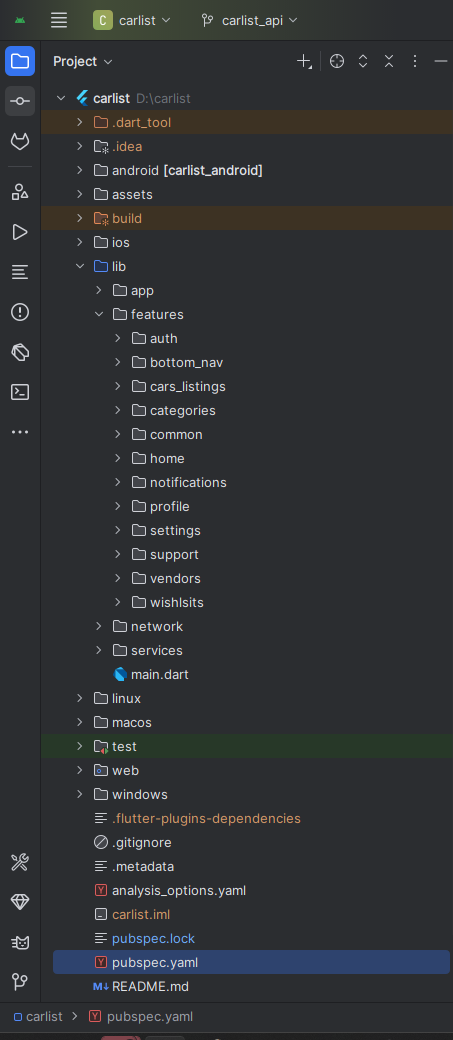
All you need to follow the lib(Library) Folder for any logical and UI changes in this project.
lib/
├── app/
├── core/
│   └── extensions/
├── features/
│   ├── auth/
│   │   ├── data/
│   │   │   └── models/
│   │   ├── bloc/
│   │   └── ui/
│   │       ├── screens/
│   │       └── widgets/
│   ├── bottom_nav/
│   │   ├── bloc/
│   │   └── ui/
│   │       ├── screens/
│   │       └── widgets/
│   ├── cars_listings/
│   │   ├── data/
│   │   │   └── models/
│   │   ├── bloc/
│   │   └── ui/
│   │       ├── screens/
│   │       └── widgets/
│   ├── categories/
│   │   ├── data/
│   │   │   └── models/
│   │   ├── bloc/
│   │   └── ui/
│   │       ├── screens/
│   │       └── widgets/
│   ├── common/
│   │   ├── data/
│   │   │   └── models/
│   │   ├── bloc/
│   │   ├── services/
│   │   └── ui/
│   │       └── widgets/
│   ├── home/
│   │   ├── data/
│   │   │   └── models/
│   │   ├── bloc/
│   │   └── ui/
│   │       ├── screens/
│   │       └── widgets/
│   ├── notifications/
│   │   ├── data/
│   │   │   └── models/
│   │   ├── bloc/
│   │   └── ui/
│   │       ├── screens/
│   │       └── widgets/
│   ├── profile/
│   │   ├── data/
│   │   │   └── models/
│   │   ├── bloc/
│   │   └── ui/
│   │       └── screens/
│   ├── settings/
│   │   ├── data/
│   │   │   └── models/
│   │   ├── bloc/
│   │   └── ui/
│   │       └── screens/
│   ├── support/
│   │   ├── data/
│   │   │   └── models/
│   │   ├── bloc/
│   │   └── ui/
│   │       ├── screens/
│   │       └── widgets/
│   ├── vendors/
│   │   ├── data/
│   │   │   └── models/
│   │   ├── bloc/
│   │   └── ui/
│   │       ├── screens/
│   │       └── widgets/
│   └── wishlists/
│       ├── data/
│       │   └── models/
│       ├── bloc/
│       └── ui/
│           ├── screens/
│           └── widgets/
├── network/
│   └── payment_services/
└── services/
Screens
App Screens:
Auth Screens (auth/ui/screens):
• Splash Screen
• Login Screen
• Register Screen
• OTP Screen
• Forget Password
• Reset Password
• Change Password
Bottom Navigation (bottom_nav/ui/screens):
• Bottom Nav
Home (home/ui/screens):
• Home Screen
Car Listings (cars_listings/ui/screens):
• Cars Listings Screen
• Listing Details Screen (Car Details with Specifications)
Categories (categories/ui/screens):
• Categories Screen (Car Brands & Categories)
Vendors (vendors/ui/screens):
• Vendors Screen
• Vendor Details Screen
Settings (settings/ui/screens):
• Settings Screen
• Language Selection Screen
Support (support/ui/screens):
• Support Tickets Screen
• Ticket Details Screen
Wishlists (wishlists/ui/screens):
• Wishlist Screen (Saved Cars)
Profile (profile/ui/screens):
• Profile Screen
• Edit Profile
Dashboard (dashboard/ui/screens):
• Dashboard Screen
Notifications (notifications/ui/screens):
• Notifications Screen
Requirements
Download and install Any one from these IDE(Android studio, Vs Code) on your computer.
- Source Android Studio: https://developer.android.com/studio
- Source Android Studio: https://code.visualstudio.com/download
Setup Flutter and Dart SDK in your computer if you want to modify the source code
- Source Android Studio: https://docs.flutter.dev/get-started/install
Must installed Flutter and dart plugin on your IDE
Install Flutter on Windows
Install Flutter on Mac
Installation
After downloading file from CodeCanyon you will get a zip file. Extracting the zip file you will get Documentation Folder and ... installable.zip included in there:
- Unzip the source code and open it in your IDE.
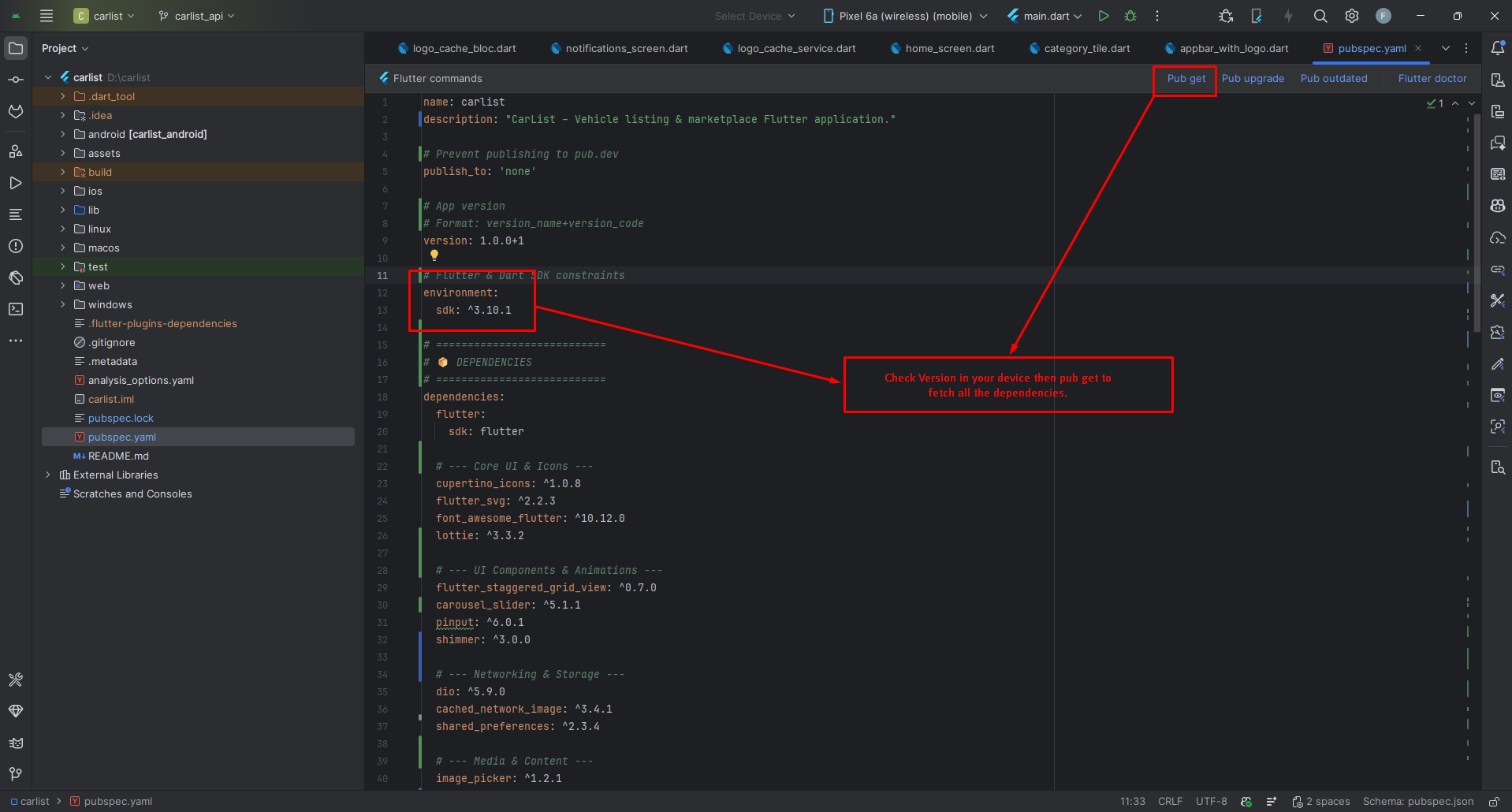
- On your IDE find for pubspecs.yaml file then click on pub get on top right side your IDE.
- Please make sure you are using Flutter version minimum 3.30.0
- Open an emulator or connect a real device and then click on Run Button for compile the project.
Flutter Packages
Icons & UI Essentials
cupertino_icons: ^1.0.8 >> iOS-style icons
flutter_svg: ^2.2.3 >> SVG rendering
font_awesome_flutter: ^10.12.0 >> Font Awesome icons
UI / Layout / Animations
carousel_slider: ^5.1.1 >> Image/content carousels
flutter_staggered_grid_view: ^0.7.0 >> Masonry / staggered grids for car listings
shimmer: ^3.0.0 >> Shimmer loading placeholders
lottie: ^3.3.2 >> Lottie animations
Forms / Inputs
pinput: ^6.0.1 >> PIN/OTP input fields
Networking & Data
dio: ^5.9.0 >> HTTP client for API calls
State Management
flutter_bloc: ^8.1.6 >> BLoC state management pattern
equatable: ^2.0.5 >> Value equality for BLoC states
Local Storage & Utilities
shared_preferences: ^2.3.4 >> Simple key-value storage
intl: ^0.20.2 >> Internationalization & formatting
Media & File Handling
image_picker: ^1.2.1 >> Pick images from gallery/camera
cached_network_image: ^3.4.1 >> Cached network images for car photos
HTML & WebView
flutter_html: ^3.0.0 >> Render HTML content in car descriptions
Maps & Location
geolocator: ^14.0.2 >> Get current device location for nearby car search
geocoding: ^4.0.0 >> Convert between coordinates and addresses
Links & URL Launching
url_launcher: ^6.3.2 >> Open URLs, dialer for vendor contact, mail, etc.
Notifications & Push
firebase_core: ^4.3.0 >> Required core for Firebase
firebase_messaging: ^16.1.0 >> FCM push notifications
flutter_local_notifications: ^19.5.0 >> Local notifications
onesignal_flutter: ^5.3.4 >> OneSignal push notifications
App Icons
flutter_launcher_icons: ^0.14.4 >> Generate app launcher icons
Mobile App Setting
Configure your mobile app settings through the admin panel. This section covers all essential configurations including home page content, general settings, and plugin integrations.
Home Page
Customize the content and appearance of your mobile app's home page. Update images, titles, and section headings to match your brand.
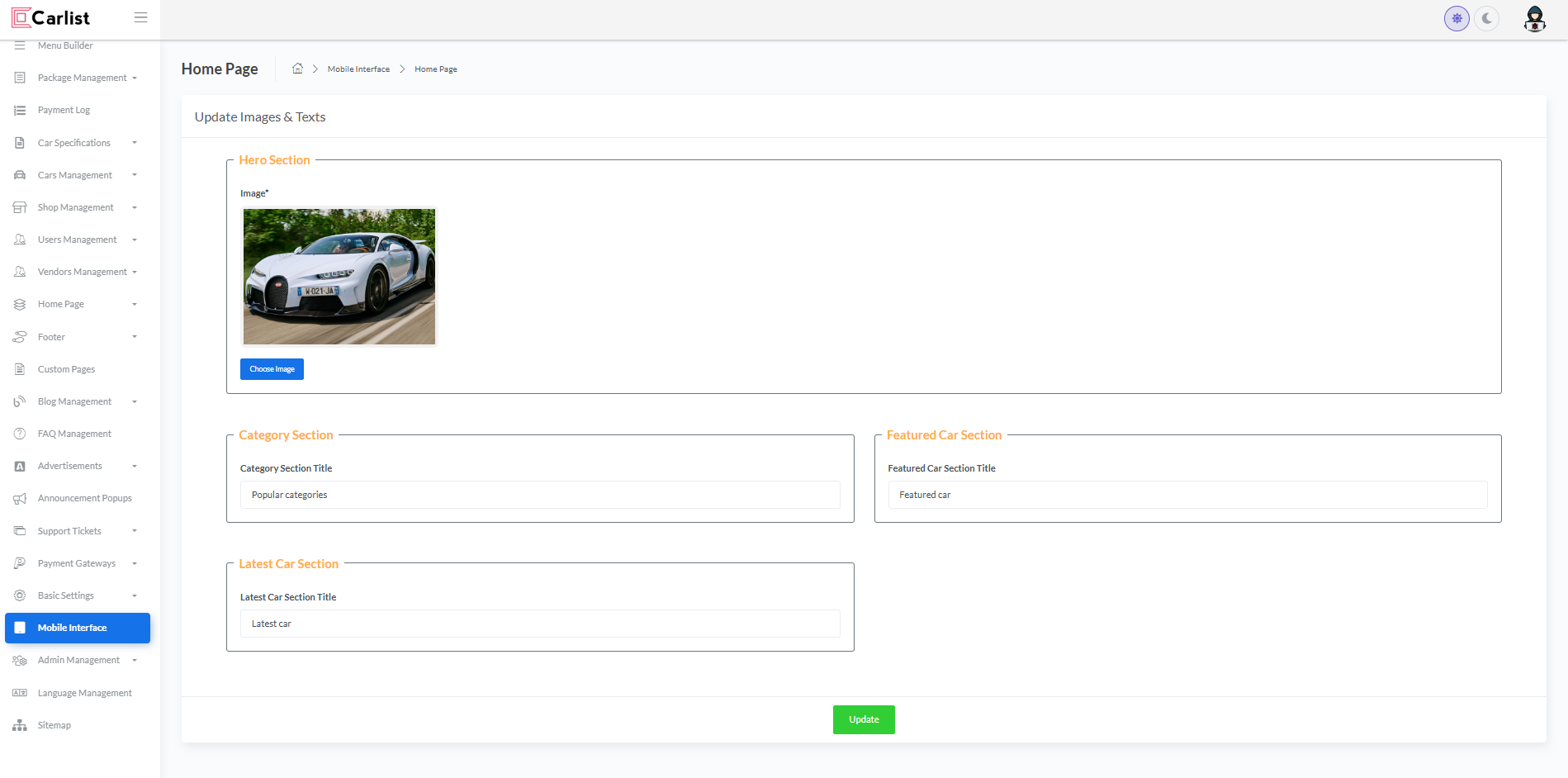
Category Section
| Category Section Title | Featured Car Brands (Example) |
Featured Cars Section
| Featured Cars Section Title | Featured Cars (Example) |
Latest Cars Section
| Latest Cars Section Title | Latest Cars (Example) |
General Settings
Configure core application settings including API base URL, favicon, and logo.
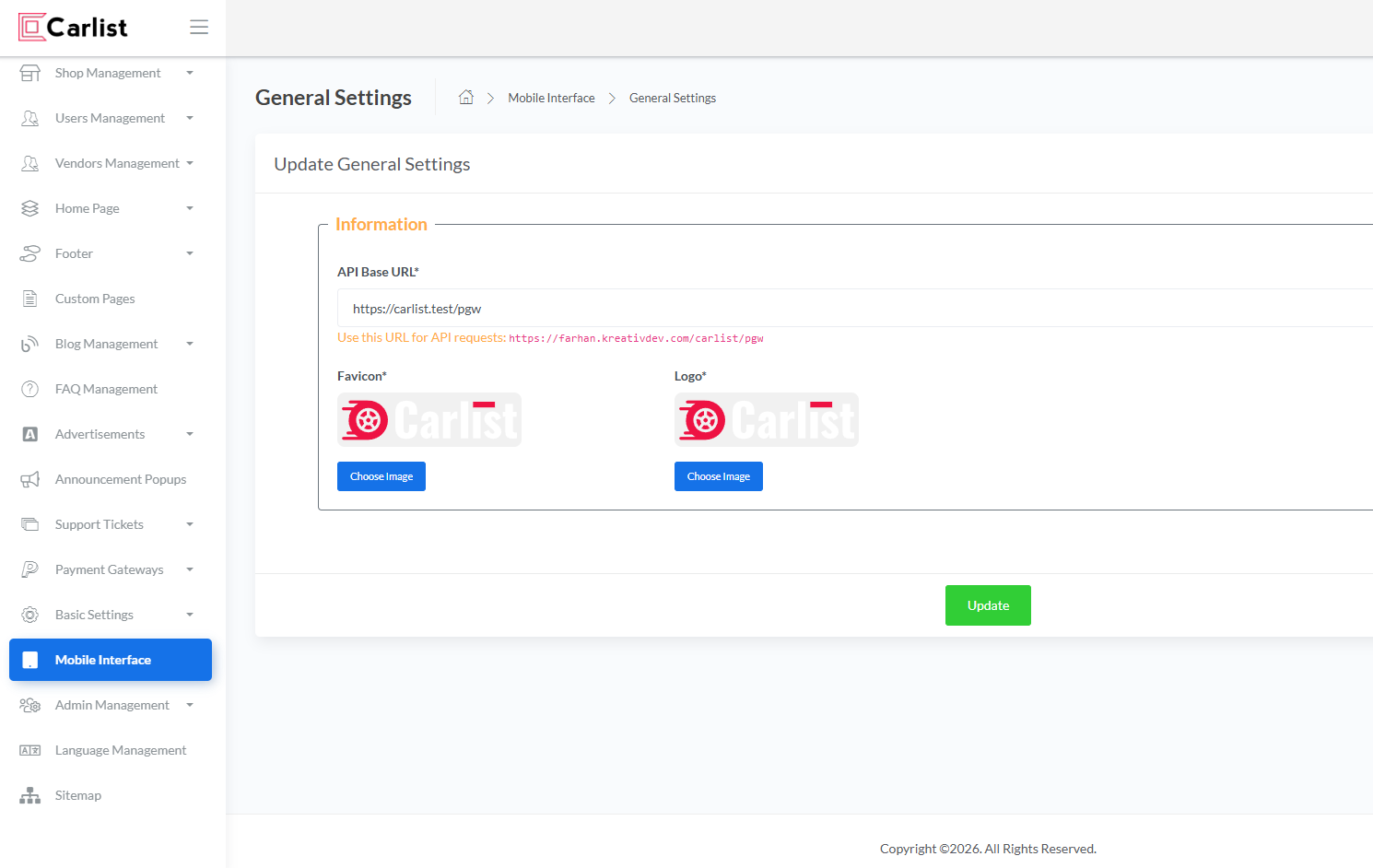
Information
| API Base URL * |
https://php82.kreativdev.com/carlist/demo/pgw (Example)Use this URL for API requests in your mobile application |
| Favicon * | Upload your favicon image (recommended: 32x32px or 64x64px) |
| Logo * | Upload your application logo (recommended: transparent PNG, 512x512px) |
Plugins
Configure third-party integrations and plugins for enhanced functionality.
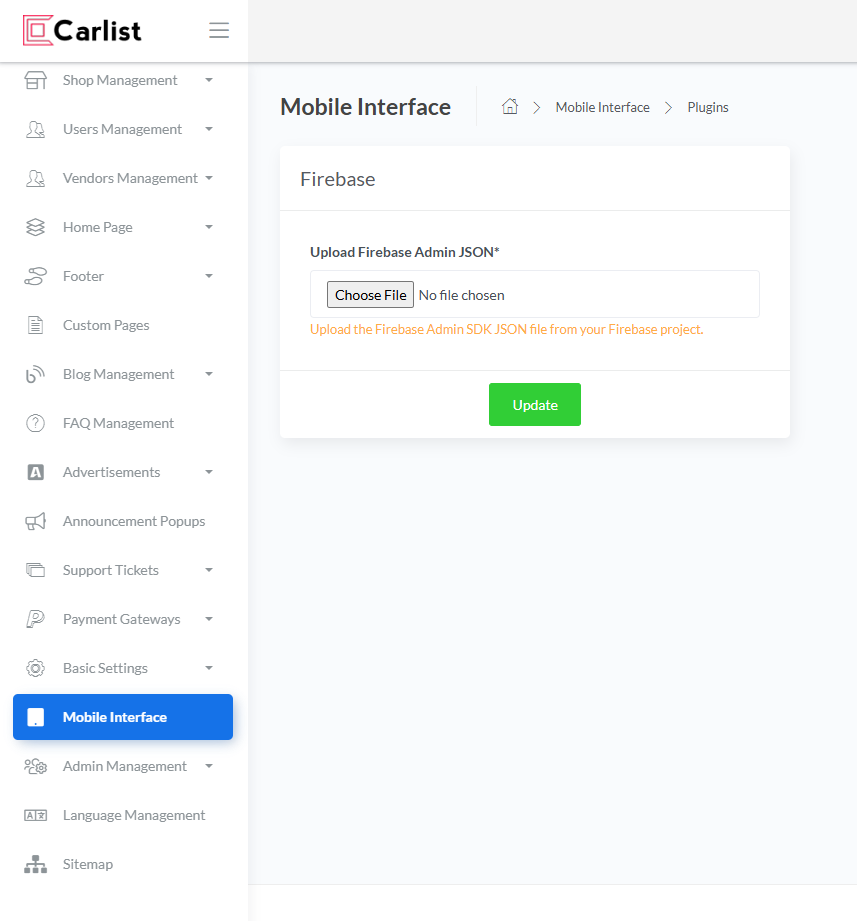
Firebase Configuration
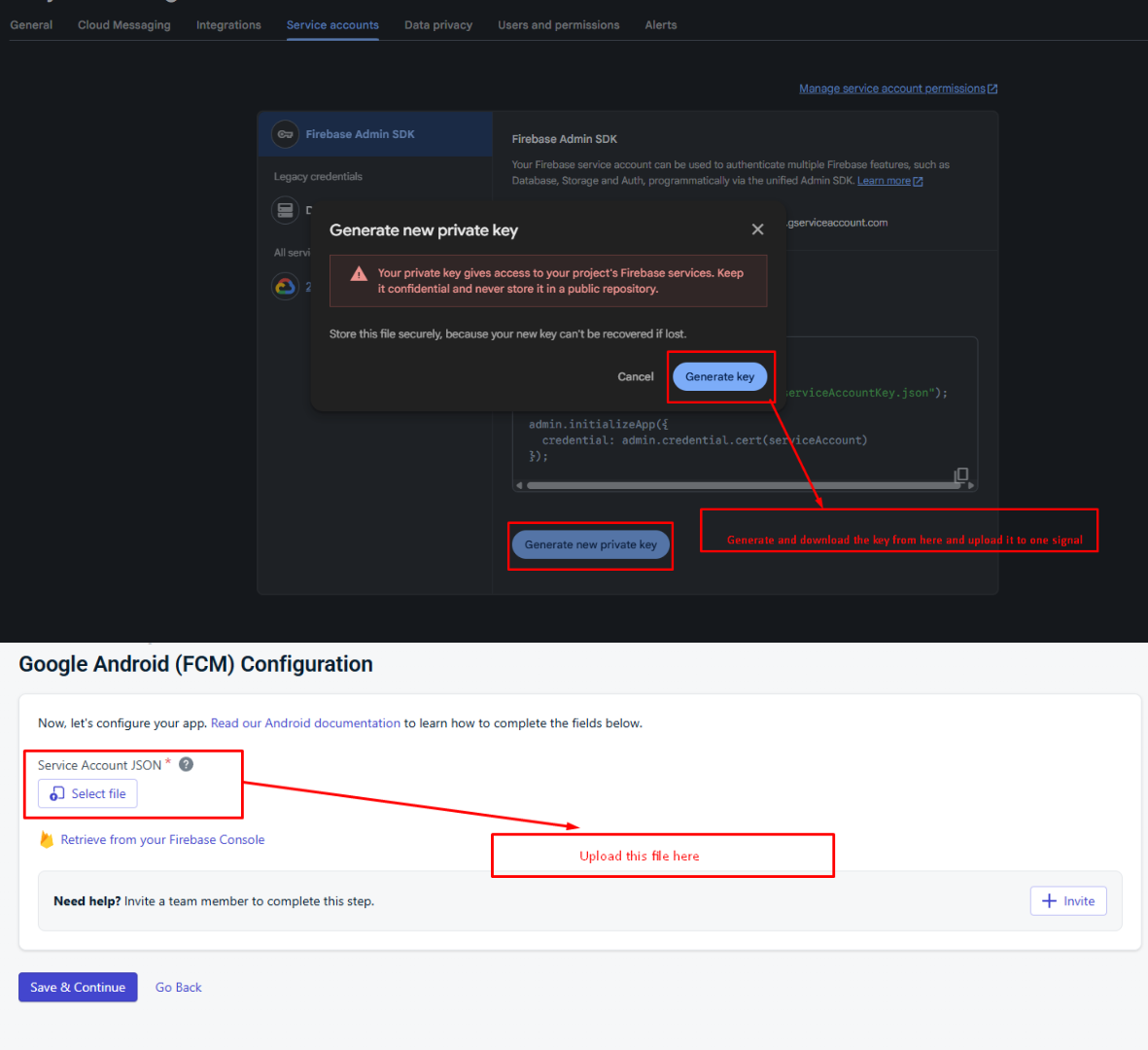
| Upload Firebase Admin JSON * |
Upload the Firebase Admin SDK JSON file from your Firebase project.
Note: You can change the file by re-uploading it if needed. |
How to get Firebase Admin SDK JSON:
- Go to your Firebase Console
- Select your project
- Click on Project Settings (gear icon)
- Navigate to Service Accounts tab
- Click "Generate New Private Key"
- Download and upload the JSON file here
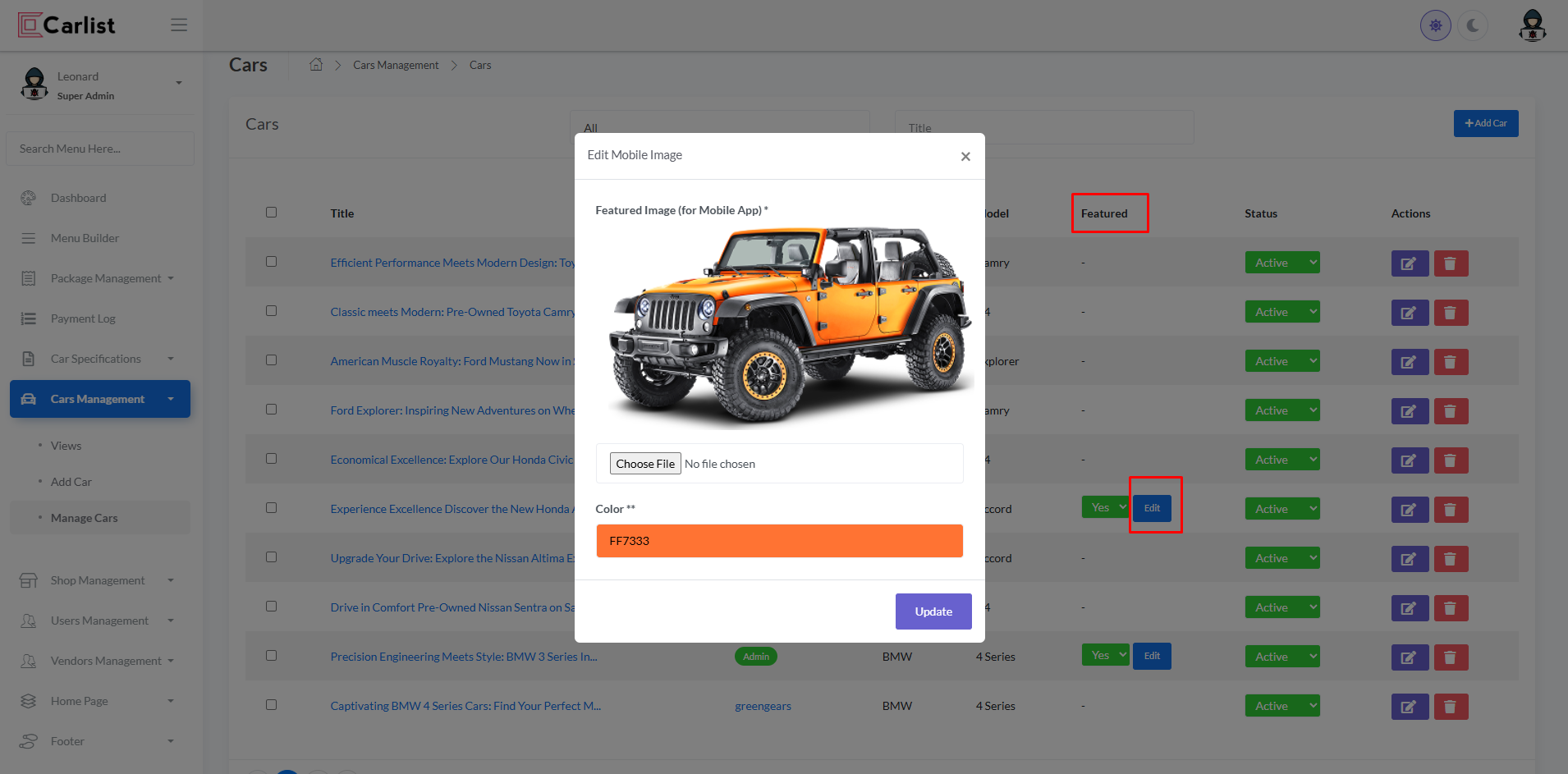
Home Featured List Slider Settings
Configure the featured car list slider settings displayed on your mobile app's home page. Customize the slider behavior and appearance.
API Setup
This mobile application connects to your backend server via API. You only need to change the API URL to connect the app with your server.
Step 1: Open API Configuration File
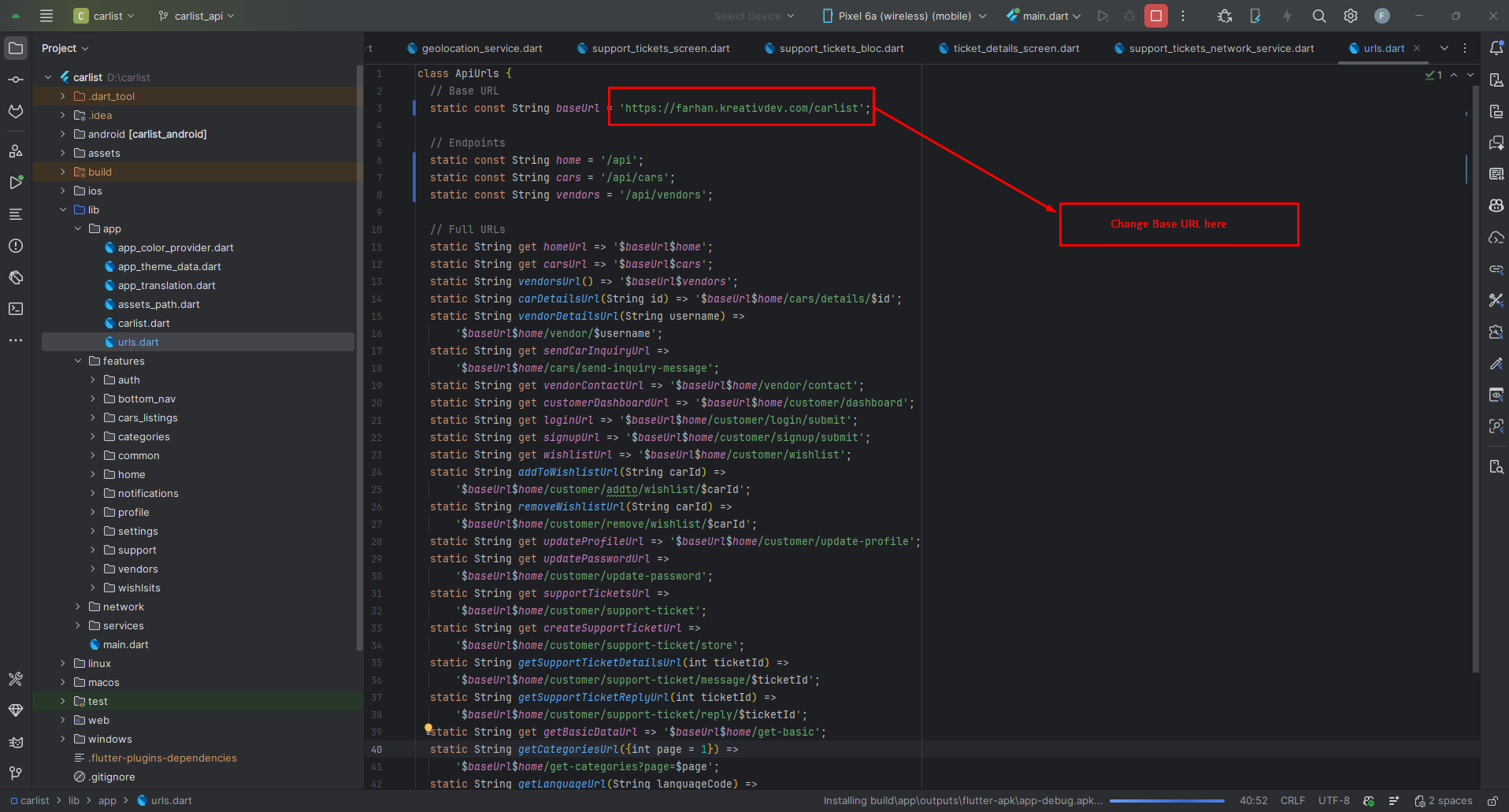
Navigate to: lib/app/urls.dart
Step 2: Change API Base URL
Find this line in the file (around line 4):
Replace it with your own server URL:
Example URLs:
static const String coreUrl = 'https://mycarlist.com';
// Example 2: Subdomain
static const String coreUrl = 'https://api.mycarlist.com';
// Example 3: Domain with folder
static const String coreUrl = 'https://example.com/carlist';
Step 3: Save and Test
- Save the
urls.dartfile after making changes - Run
flutter cleanin terminal - Run
flutter pub getin terminal - Run the app and verify the connection
Important Notes
- The app automatically generates all API endpoints from the base URL
- Make sure your server is running and accessible
- Use HTTPS (not HTTP) for production apps
- Ensure your backend API is properly configured and running
Setup Application
Change App Primary Color
The app's primary color is #C7002C (red). You can change this by modifying the color value in the code.
Open lib/app/carlist.dart (around line 27) and update the default primary color:
static Color primaryColor = const Color(0xFFC7002C);
...
static const Color _defaultPrimaryColor = Color(0xFFC7002C);
Note: The format 0xFFC7002C means 0xFF (opacity) + C7002C (hex color). You can also configure the primary color from the admin panel's General Settings, which will override this default value.
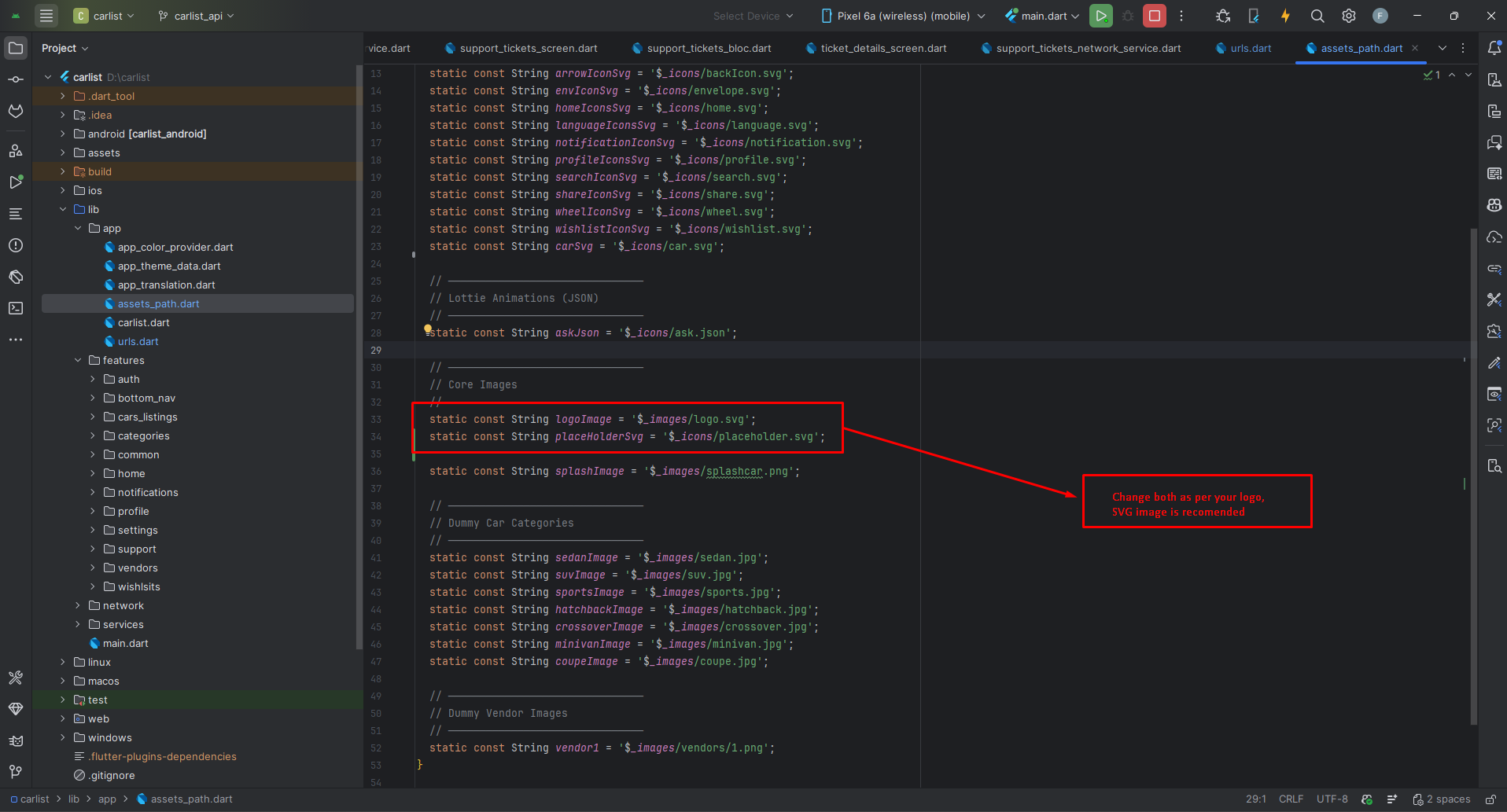
Change App Logo
Open lib/app/assets_path.dart
Change Launcher Icons
The app uses flutter_launcher_icons: ^0.14.4 package (already installed) to generate launcher icons for Android and iOS.
Step 1: Prepare Your Icon
- Create your app icon image (recommended size: 1024x1024 pixels)
- Save it as a PNG file with transparency support
- Navigate to
assets/images/folder in your project
Step 2: Replace Icon Files
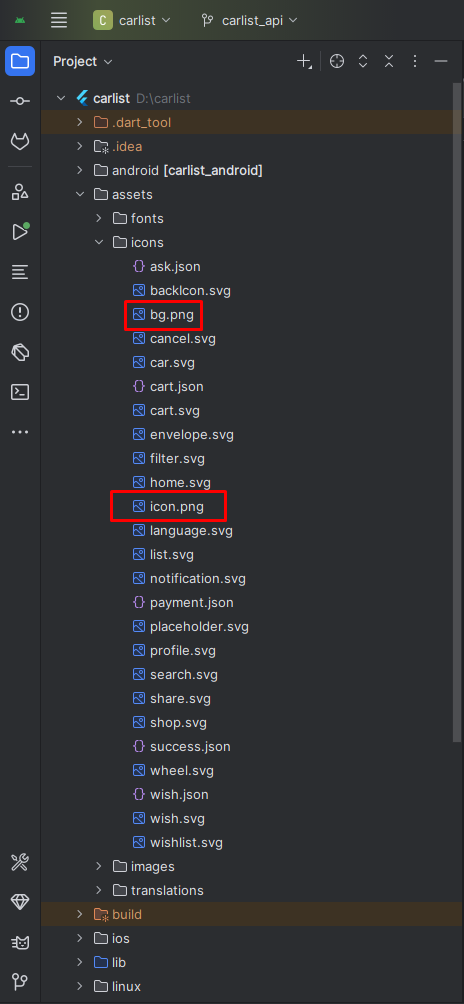
- Replace the existing icon files with your own icons (keep the same file names):
assets/icons/icon.png- Main launcher icon (1024x1024 px recommended)assets/icons/bg.png- Android adaptive icon background
Step 3: Generate Launcher Icons
Run the following command in your terminal to generate launcher icons:
This command will automatically generate all required icon sizes for both Android and iOS platforms.
Step 4: Verify Changes
- Check
android/app/src/main/res/- Android icons generated - Check
ios/Runner/Assets.xcassets/AppIcon.appiconset/- iOS icons generated - Run the app to see your new launcher icon
Additional Resources
- Rename App: https://pub.dev/packages/rename_app
- Flutter Launcher Icons: https://pub.dev/packages/flutter_launcher_icons
- Change Package Name: https://pub.dev/packages/change_app_package_name
Firebase Settings
This app uses Firebase Cloud Messaging (FCM) and OneSignal for push notifications. Follow these steps to configure your own Firebase project and OneSignal account.
Step 1: Create Firebase Project
- Go to Firebase Console
- Click "Add Project" or select an existing project
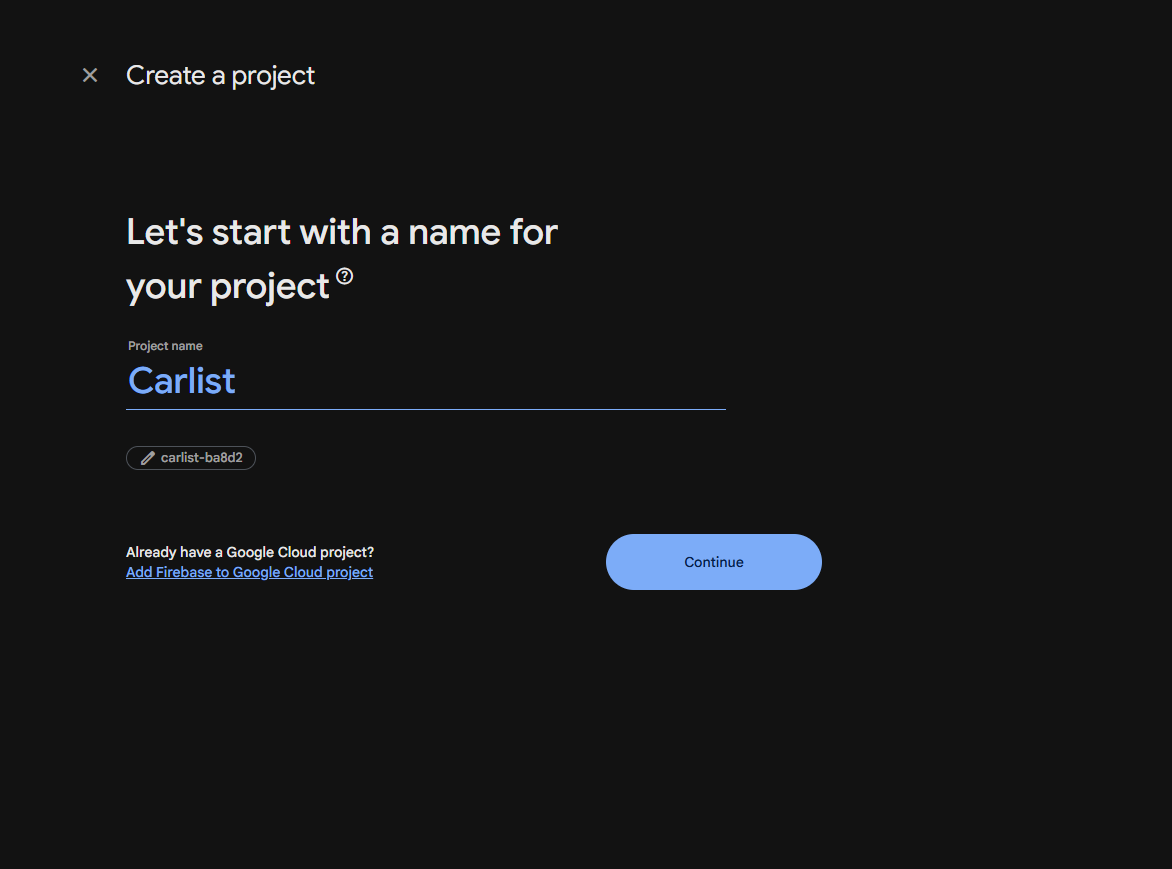
- Enter your project name (e.g., "CarList App")
- Enable Google Analytics (optional but recommended)
- Click "Create Project" and wait for setup to complete
Step 2: Add Android App to Firebase
- In Firebase Console, click the Android icon to add an Android app
- Enter your Android package name:
com.example.carlist(or your custom package name) - Enter app nickname (optional): CarList Android
- Click "Register app"
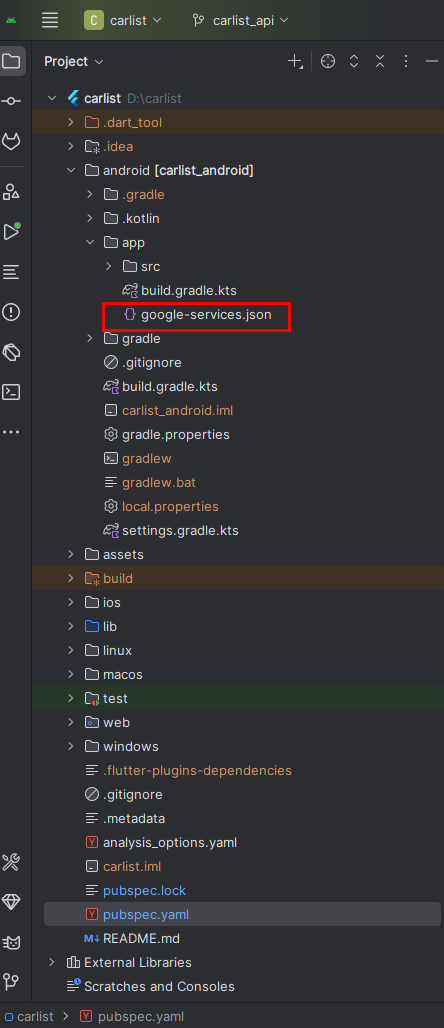
- Download
google-services.jsonfile - Replace the file at
android/app/google-services.jsonin your project
Step 3: Add iOS App to Firebase (Optional)
- In Firebase Console, click the iOS icon to add an iOS app
- Enter your iOS bundle ID:
com.example.carlist(or your custom bundle ID) - Enter app nickname (optional): CarList iOS
- Click "Register app"
- Download
GoogleService-Info.plistfile - Place the file in
ios/Runner/directory - Open project in Xcode and add the file to Runner target
Step 4: Enable Cloud Messaging API
- In Firebase Console, go to Project Settings (⚙️ icon)
- Select "Cloud Messaging" tab
- Note your Server Key and Sender ID (needed for OneSignal)
- Click "Manage API in Google Cloud Console"
- Ensure "Firebase Cloud Messaging API" is ENABLED
Step 5: Setup OneSignal Account
- Go to OneSignal and create a free account
- Click "New App/Website" in OneSignal dashboard
- Enter app name (e.g., "CarList") and select platforms (iOS, Android)
- Click "Create"
Step 6: Configure OneSignal for Android
- Select "Google Android (FCM)" configuration in OneSignal
- Enter Firebase Server Key (from Firebase Console → Cloud Messaging tab)
- Enter Firebase Sender ID (from Firebase Console → Cloud Messaging tab)
- Click "Save & Continue"
Step 7: Configure OneSignal for iOS (Optional)
- Select "Apple iOS (APNs)" configuration in OneSignal
- Upload APNs Auth Key (.p8 file) or Certificate (.p12 file) from Apple Developer
- Enter your Team ID and Key ID (for Auth Key option)
- Enter Bundle ID:
com.example.carlist - Click "Save & Continue"
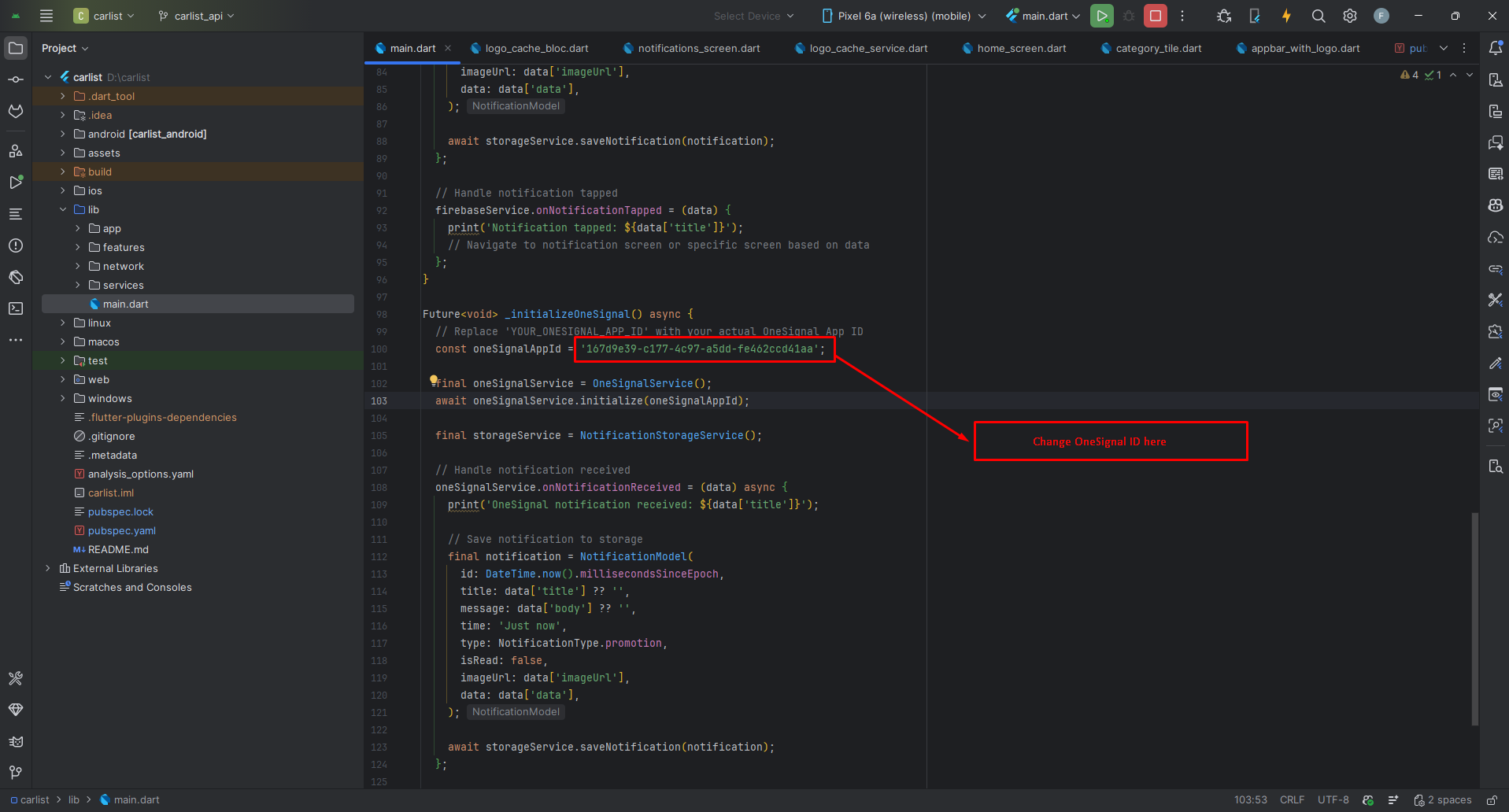
Step 8: Update OneSignal App ID in Code
- In OneSignal Dashboard, go to Settings → Keys & IDs
- Copy your "OneSignal App ID"
- Open
lib/main.dartfile (around line 43) - Replace the App ID in this line:
OneSignal.initialize("YOUR_ONESIGNAL_APP_ID_HERE"); - Save the file
Step 9: Test Notifications
- Run the app using
flutter run - Check terminal for FCM Token and OneSignal Player ID
- Test Firebase: Go to Firebase Console → Cloud Messaging → Send test message
- Test OneSignal: Go to OneSignal Dashboard → Messages → New Push → Send to Test Users
- Verify notifications appear on your device
Configuration Files Summary
| File | Location | Source |
|---|---|---|
google-services.json |
android/app/ |
Firebase Console |
GoogleService-Info.plist |
ios/Runner/ |
Firebase Console |
| OneSignal App ID | lib/main.dart (line 43) |
OneSignal Dashboard |
Troubleshooting
- FCM Token is null: Ensure google-services.json is in correct location and Firebase Cloud Messaging API is enabled
- OneSignal Player ID not showing: Verify OneSignal App ID is correct in main.dart and app has internet connection
- Notifications not received: Check device notification settings and verify app notification permissions
- iOS notifications not working: Verify GoogleService-Info.plist is added to Xcode project and APNs certificate is valid in OneSignal
Build & Run App
Run the Application:
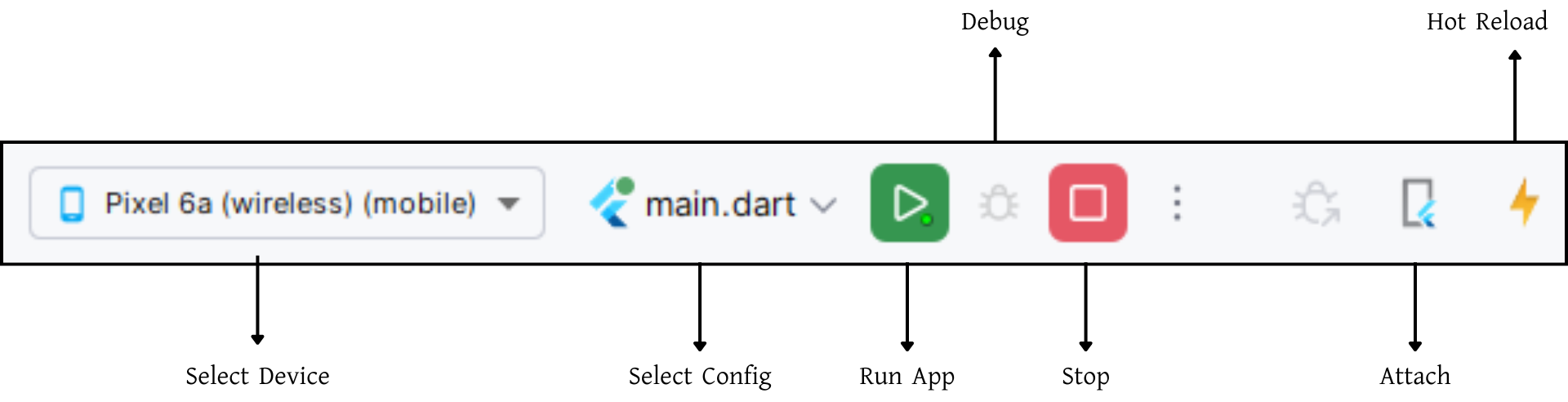
- In the target selector, select an Android device for running the app. If none are listed as available, select Tools> Android > AVD Manager and create one there. For details, see Managing AVDs.
- If you don't use Android Studio, Vs Code or IntelliJ you can use the command line to run your application using the following command:
Build Release & Publish App
1. Build Release Apk or other file type as your need.
After making all your changes and customizations, save the project. Then open the console, navigate to your project folder, and execute the following command:
⚡ For Play Store deployments, it’s recommended to use App Bundles or split APKs to reduce the final APK size.
Build and Install App:
• Generate App Bundle (recommended):
• Split APKs per ABI:
Signing the App (required for Google Play):
Before uploading, you must sign your app. Generate a signing key by running:
Create a key.properties file inside android/ folder with the following content:
keyPassword = password from previous step
keyAlias = key
storeFile = location of the keystore file (e.g. /Users/username/key.jks)
Then update android/app/build.gradle with:
def keystoreProperties = new Properties()
keystoreProperties.load(new FileInputStream(keystorePropertiesFile))
signingConfigs {
release {
keyAlias keystoreProperties['keyAlias']
keyPassword keystoreProperties['keyPassword']
storeFile file(keystoreProperties['storeFile'])
storePassword keystoreProperties['storePassword']
}
}
buildTypes {
release {
signingConfig signingConfigs.release
}
}
2. Android (Play Store)
Follow the official guidelines to publish your signed app or app bundle to the Google Play Store:
https://flutter.dev/docs/deployment/android3. iOS (App Store)
Follow the official guidelines to publish your app to the Apple App Store:
https://flutter.dev/docs/deployment/iosRun flutter build apk --release for Android.
Run flutter build ios --release for iOS.
Follow Flutter docs for publishing to Play Store / App Store.
Support
For support, customization, or queries, contact us via email.